Beyond the Surface: Why a Kitchen Backsplash Defines the Modern Kitchen
In the world’s most memorable kitchens, the backsplash is never an afterthought. It is the quiet architectural feature that bridges cabinetry, countertops, lighting, and personality into one cohesive composition. For California homeowners embracing open-concept living and timeless design, a thoughtfully selected kitchen backsplash is no longer simply a protective wall covering—it is a defining design statement that elevates the entire room.
Magazine-worthy kitchens are rarely built around one dramatic feature alone. Instead, they succeed because every material contributes to a unified visual language. Cabinet finishes complement stone countertops. Hardware introduces subtle contrast. Natural light enhances texture. And the backsplash quietly connects every element while adding rhythm, depth, and sophistication. It occupies relatively little square footage, yet it often becomes the feature guests remember most. Today’s homeowners are investing less in fleeting trends and more in enduring materials, thoughtful craftsmanship, and details that continue to impress years after installation. The backsplash has become central to that philosophy—not because it demands attention, but because it rewards careful observation.“Exceptional kitchens are remembered not for their size, but for the confidence of every design decision.”
EDITOR’S NOTE: Designers continue to favor timeless materials over short-lived trends. Stone, handcrafted ceramics, textured porcelain, and large-format tile remain popular because they age gracefully while adapting to evolving interior styles.
The Backsplash Has Become the Kitchen’s Signature Feature
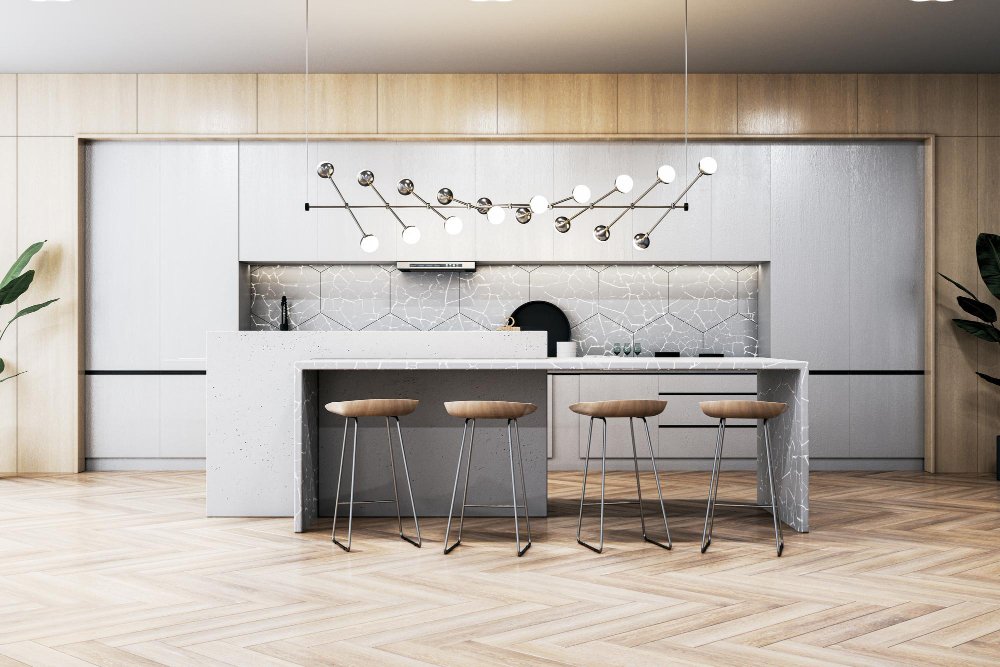
For decades, backsplashes existed primarily for practicality. They protected painted walls from cooking splashes and everyday cleaning while blending quietly into the surrounding finishes. Modern kitchen design has dramatically expanded that role. Today, the backsplash introduces movement, texture, craftsmanship, and architectural identity. The most luxurious kitchens rarely rely on excess. They rely on restraint executed beautifully. A beautifully proportioned backsplash guides the eye naturally across the room. It establishes continuity between countertops and cabinetry while balancing colors, textures, and finishes. Whether extending to the ceiling behind open shelving or wrapping around a cooking alcove, the material creates a visual anchor that ties the composition together. California homes particularly benefit from this layered approach to design. Abundant natural light reveals subtle texture throughout the day, allowing handcrafted tile, honed stone, textured porcelain, or artisan mosaics to display changing depth and character from morning until evening.
DESIGN HIGHLIGHT: Extending a backsplash to the ceiling behind a range or open shelving creates architectural emphasis while making the kitchen appear taller and more refined.
Material selection deserves careful consideration. Natural stone delivers timeless elegance with unique veining that ensures every installation feels one of a kind. Porcelain provides exceptional durability with minimal maintenance. Handmade ceramic tiles introduce warmth through subtle imperfections, while contemporary large-format slabs create nearly seamless surfaces with dramatic visual impact.
Color selection has also become increasingly sophisticated. Rather than relying on bold contrasts alone, many successful kitchens embrace layered neutrals, earthy tones, soft whites, muted greens, charcoal grays, or warm natural textures that complement surrounding materials instead of competing with them.
“Luxury often speaks in whispers rather than bold declarations.”
Craftsmanship Matters More Than the Material Itself
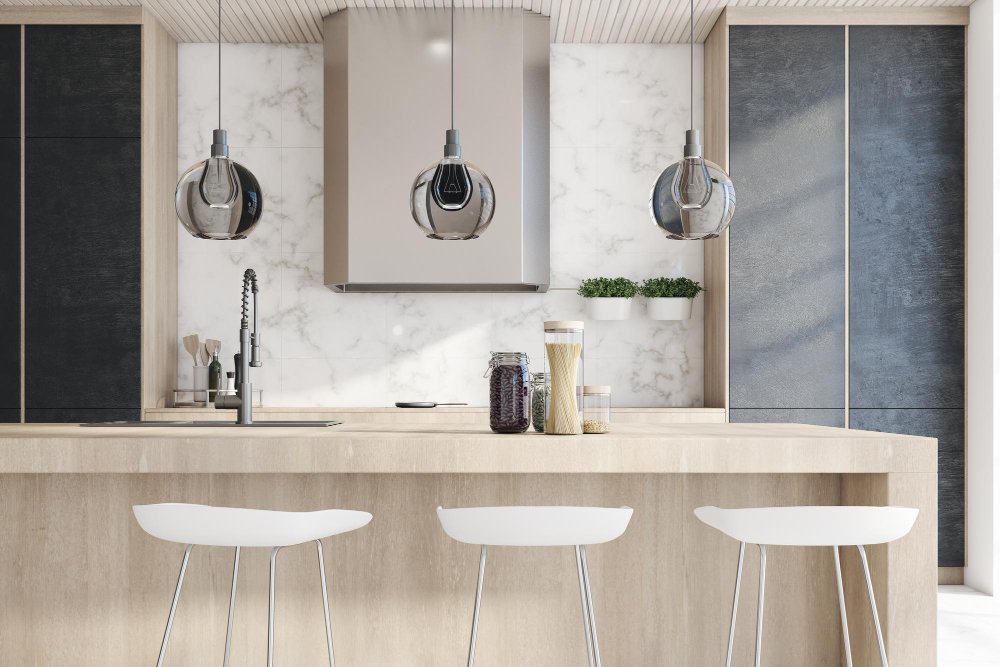
Even the finest tile cannot compensate for poor installation. Precision remains the defining characteristic of premium remodeling, and nowhere is that more apparent than in the alignment, spacing, and finishing details of a backsplash. A carefully planned kitchen wall tile installation begins long before adhesive is applied. Professional installers evaluate wall flatness, determine layout symmetry, identify focal points, and calculate precise cuts so grout lines remain balanced throughout the space. These seemingly invisible decisions separate ordinary installations from truly exceptional ones. The difference between good craftsmanship and exceptional craftsmanship is often measured in millimeters. Attention extends beyond tile placement alone. Electrical outlets should integrate cleanly within the pattern. Corner transitions require careful planning. Grout color should enhance rather than distract from the chosen material. Edge profiles must appear intentional, and transitions into countertops, cabinetry, and windows should feel effortless. Lighting further elevates the finished design. Under-cabinet illumination reveals texture while reducing shadows across work surfaces. During daylight hours, reflective finishes soften sunlight, while matte surfaces introduce quiet sophistication without excessive glare.
EDITOR’S NOTE: Before selecting tile, view samples in both daylight and evening lighting. Materials often display dramatically different tones depending on the surrounding illumination.
Maintenance should also influence design decisions. Larger tiles reduce grout joints, simplifying cleaning. Porcelain offers outstanding stain resistance, while properly sealed natural stone provides enduring beauty when maintained correctly. Selecting materials that balance elegance with everyday practicality ensures the kitchen remains visually impressive for years to come.
PRACTICAL INSIGHT: A successful backsplash combines aesthetics with performance. Moisture resistance, stain resistance, ease of cleaning, and installation quality all contribute to long-term satisfaction.
Design That Reflects Lifestyle Instead of Trends
Every memorable kitchen reflects the people who use it. Some families entertain frequently, requiring expansive preparation areas and durable finishes capable of supporting constant activity. Others prioritize quiet mornings, intimate meals, and calming visual environments that encourage relaxation. That diversity is precisely why backsplashes have evolved beyond decorative accents. They now contribute directly to how a kitchen feels, functions, and ages over time. A thoughtfully selected decorative kitchen backsplash becomes more than a finishing touch. It introduces texture without clutter, visual interest without overwhelming the room, and individuality without sacrificing timeless appeal. Whether inspired by contemporary minimalism, Mediterranean warmth, Scandinavian simplicity, transitional elegance, or classic California design, the backsplash helps establish the emotional tone of the entire kitchen. The most successful kitchens never chase trends—they establish an identity that remains relevant for decades. Open shelving, integrated appliances, natural wood cabinetry, waterfall islands, concealed storage, and oversized windows have transformed modern kitchens into living spaces rather than purely functional workrooms. The backsplash supports this evolution by acting as a visual bridge between architecture and everyday living. Texture has become increasingly influential in contemporary interiors. Subtle dimensional tile, handcrafted surfaces, matte glazes, brushed stone, and softly reflective finishes add richness without excessive ornamentation. These restrained details reward repeated viewing, revealing new character under changing light throughout the day.“True sophistication is discovered in the details people notice only after they pause.”
Timeless Kitchens Are Built One Thoughtful Decision at a Time
The finest kitchens are rarely defined by a single premium appliance or an extravagant island. Their lasting appeal comes from harmony—materials that complement one another, craftsmanship that disappears into the background, and thoughtful details that quietly improve everyday living. A backsplash embodies that philosophy perfectly. Though modest in size, it influences proportion, balance, texture, maintenance, durability, and visual continuity more than almost any other finish within the room. As California homeowners continue investing in spaces that support cooking, entertaining, remote work, and family connection, every design decision becomes increasingly meaningful. Selecting materials with lasting beauty, prioritizing expert installation, and embracing timeless composition ensures the kitchen remains relevant well beyond changing design trends.
EDITOR’S CHOICE: The best backsplash is not necessarily the boldest. It is the one that makes every surrounding element appear stronger, more balanced, and more intentional.
EDITOR’S NOTE: Before making a final selection, assemble samples of cabinetry, countertop materials, flooring, paint, and lighting together. Viewing the entire palette at once often reveals combinations that individual samples cannot.
Ultimately, a remarkable kitchen is built through hundreds of thoughtful choices rather than one dramatic gesture. When materials, craftsmanship, and design work together with purpose, the backsplash becomes far more than a protective surface. It becomes the architectural thread that unifies the kitchen, reflects the homeowner’s style, and quietly defines the heart of the home for years to come.